

Suomenlinna
InexpensiveSea fortress · UNESCO
A 15-minute ferry on the normal transit ticket. Bring lunch and walk the far ramparts.
ArchipelagoFerryHalf day
In 60 seconds
Helsinki is a small capital that rewards attention rather than sightseeing. The centre can be crossed on foot in half an hour, and most of what makes the city distinctive — sauna culture, Finnish design, the market halls, the ferry out to Suomenlinna — sits inside that radius. Two days is right. Add a third only if you want the islands, or an architecture route out to Otaniemi.
See
The things that would make the trip incomplete without them.
Sea fortress · UNESCO
A 15-minute ferry on the normal transit ticket. Bring lunch and walk the far ramparts.
Contemporary architecture · Free
The clearest statement of what Finland thinks public space is for.
Public sauna · Seaside
Book the evening slot and go into the sea between rounds. Non-negotiable.
Eat
A short list, kept short on purpose. Each entry answers one question: when is this the right choice?
Where to eat the food this city is actually known for.
Finnish · Since 1934
Fried herring and Baltic dining rooms as they were before anyone curated them.
No booking, no ceremony, reliably good.
Vegetarian · Small plates
The city's best argument that a vegetable restaurant needs no apology.
Worth planning the evening around.
Nordic · Zero waste
A zero-waste kitchen that never mentions it on the plate.
Mornings, and the slow hour between things.
Specialty coffee · Roastery
Where the rest of the city's cafés buy their beans.
Beyond the obvious
Less obvious, rarely queued for, and usually the part people remember.
1920s wooden garden suburb
Twelve minutes by tram and a century away from the centre.
Small island · Sauna & restaurant
Suomenlinna's quieter neighbour. Half the boat traffic, all of the view.
Itineraries
Routes we would actually follow, in the order we would follow them.
The shape most ferry arrivals should follow: centre in the morning, island or sauna in the afternoon.
Market, design district, island, sauna.
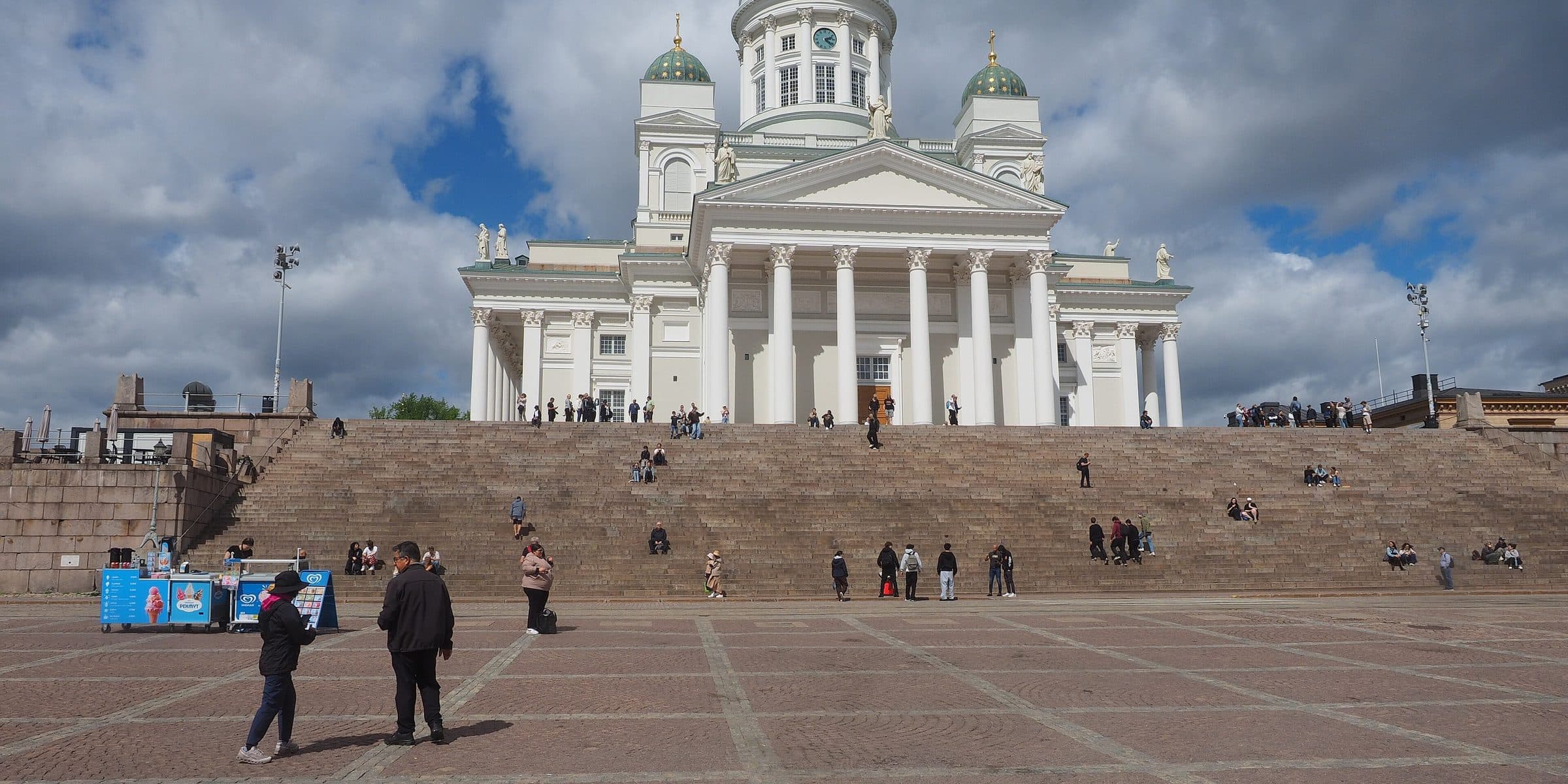
Start at the Old Market Hall, then walk up to the cathedral steps for the view back down.
Small plates in Punavuori, ten minutes' walk south.
Ferry from Market Square. Walk to the far ramparts rather than stopping at the first café.
Fried herring in a dining room that has not changed since the 1930s.
Late sauna slot on the water. Sea swim between rounds, whatever the month.
After dark
Cocktails
Small, dark and technically excellent. Sit at the bar.
Rooftop
Fourteen floors up. One drink for the view, then go somewhere better.
Orientation
How the city is actually divided, and what each part is for.
Bars, saunas, second-hand
Where the city is loudest and cheapest. Ten minutes from the centre.
Studios, galleries, restaurants
Two hundred design addresses inside a few blocks. Start on Uudenmaankatu.
Stay
Areas rather than hotels — pick the right one and the rest follows.
Transport · Convenience
Every tram, the airport train and the ferry terminals within walking distance.
Boutique · Restaurants
The better choice for a second visit, and for eating well without planning.
Practical
Context
Enough to make what you are looking at legible.
Founded by Gustav I of Sweden as a trading post meant to rival Tallinn. It failed for two centuries.
Made capital of the Russian Grand Duchy of Finland; Engel's neoclassical Senate Square dates from this decision.
Independence, then a twentieth century of architecture — Saarinen, Aalto — that defined how the world reads 'Nordic'.
Further out
Worth a day if you have one to spare.
Wooden old town on a river
Red shore houses and Finland's second-oldest town. Go in the afternoon.
Estonia, across the Gulf
Close enough for a day, better as the second half of a route.